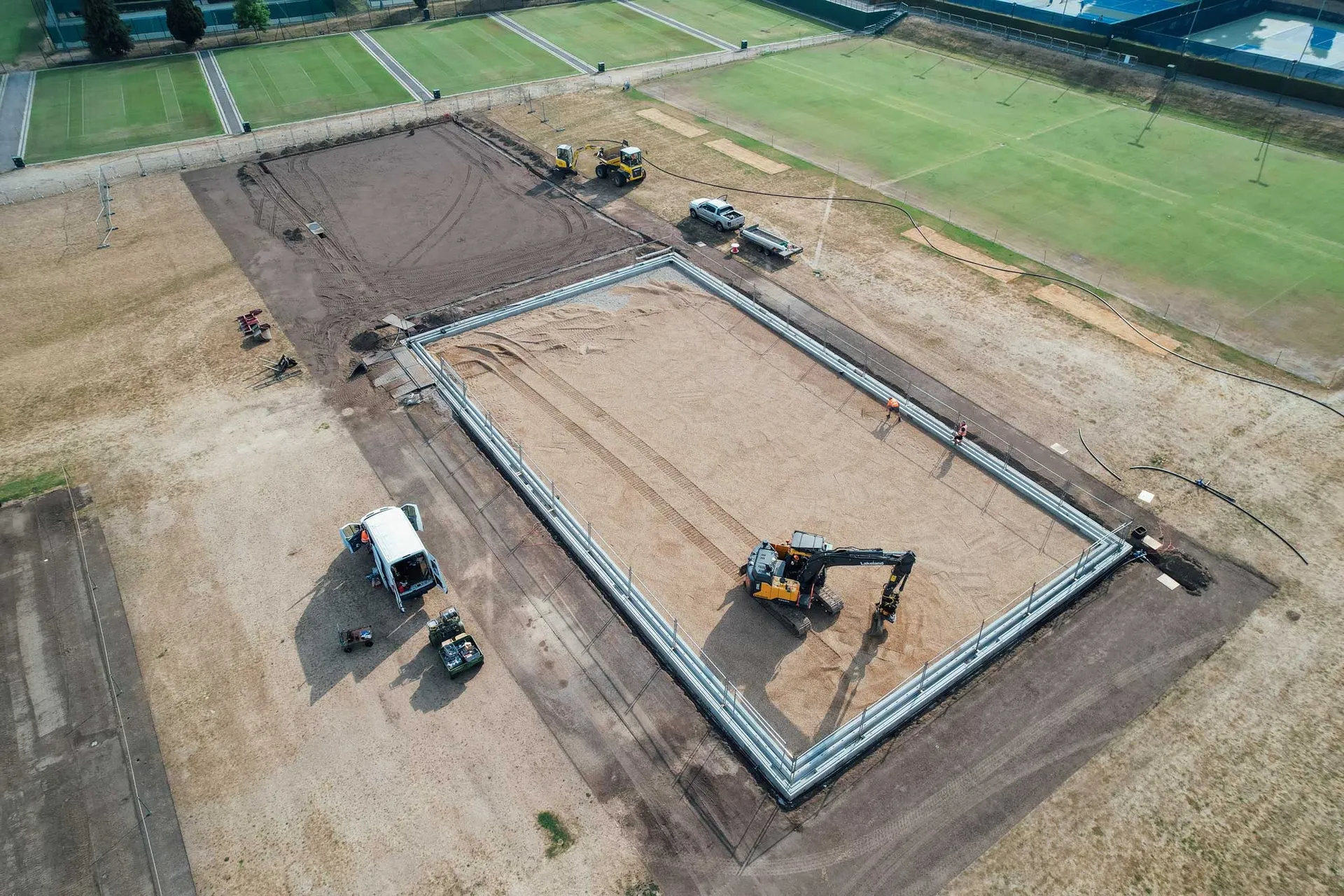
Basic sand court
Total range
204.000 – 320.000 ₺
22 × 14 m · VAT excl.
- Excavation, drainage gravel and pipes
- Geotextile fabric and 72 m of kerb
- 40 cm washed sand: 123 m³
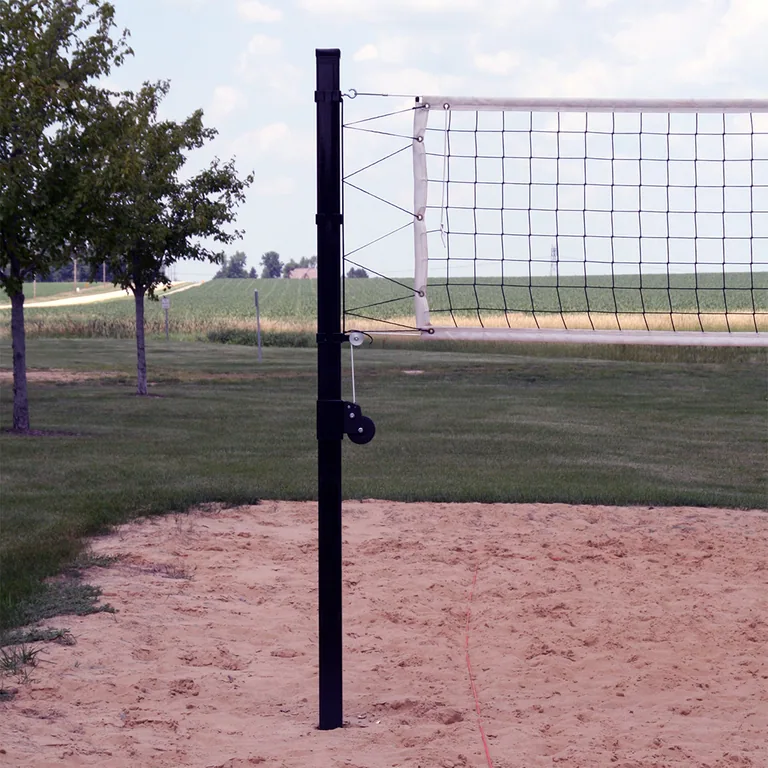
- Post anchors, net set, boundary webbing
A sand court is not priced by its sand alone: excavation, drainage, geotextile and kerb together cost more than the sand itself. This page sets out the beach volleyball court cost line by line, with quantity, unit price and share of the total.
Short answer: in 2026 the basic build cost of a 22 × 14 m (308 m²) beach volleyball court in Türkiye is 204.000 – 320.000 ₺, VAT excluded. That range covers excavation, drainage gravel and pipes, geotextile, kerb, 40 cm of sand (123 m³), post anchors, the net set and boundary webbing. The largest single item is the sand, at 38% of the total. Lighting adds 18.000 – 60.000 ₺ and a perimeter fence 90.000 – 180.000 ₺; annual maintenance costs 15.000 – 30.000 ₺. The final price is set by a written quotation after a site survey.
The first step in comparing quotations is to read the quantities, not the totals. The take-off below follows the cross-section of a 22 × 14 m court: 40 cm of sand over geotextile fabric and 20 cm of drainage gravel. Why the court has these dimensions and this build-up is explained in the beach volleyball section of the home page; here there is only the calculation.
Excavation
185 m³22 × 14 × 0.60 m (sand + gravel) = 184.8 m³
Sand
123 m³22 × 14 × 0.40 m = 123.2 m³
Drainage gravel
62 m³22 × 14 × 0.20 m = 61.6 m³
Geotextile fabric
340 m²308 m² × 1.10 (overlaps and edge turn-up) = 338.8 m², rounded to the roll
Drainage pipe
78 m4 lateral runs × 14 m + 1 collector run × 22 m
Kerb
72 m2 × (22 + 14) m, court perimeter
Post anchor footing
2 pcsOne concrete footing for each of the two posts
The nine items in the table open up the three lines that the site cost calculator adds together when "beach" is selected. On every row amount = quantity × unit price; the share is the item's mid value divided by the mid value of the basic court. Figures are 2026 market estimates for projects in Türkiye, VAT excluded, materials and labour included.
| Item | Quantity | Unit price | Amount | Share |
|---|---|---|---|---|
| Excavation and spoil removal | 185 m³ | 120 – 170 ₺/m³ | 22.200 – 31.450 ₺ | 10% |
| Drainage gravel | 62 m³ | 600 – 830 ₺/m³ | 37.200 – 51.460 ₺ | 17% |
| Drainage pipe and outlet | 78 m | 155 – 230 ₺/m | 12.090 – 17.940 ₺ | 6% |
| Geotextile fabric | 340 m² | 30 – 45 ₺/m² | 10.200 – 15.300 ₺ | 5% |
| Washed, screened sand | 123 m³ | 650 – 950 ₺/m³ | 79.950 – 116.850 ₺ | 38% |
| Kerb and concrete bed | 72 m | 255 – 375 ₺/m | 18.360 – 27.000 ₺ | 9% |
| Post anchor footing | 2 pcs | 3.000 – 7.500 ₺/pcs | 6.000 – 15.000 ₺ | 4% |
| Posts, net and antenna set | 1 set | 12.000 – 30.000 ₺/set | 12.000 – 30.000 ₺ | 8% |
| Boundary webbing and corner anchors | 1 set | 6.000 – 15.000 ₺/set | 6.000 – 15.000 ₺ | 4% |
| Basic court total | — | — | 204.000 – 320.000 ₺ | 100% |
180.000 – 260.000 ₺
Excavation + gravel + pipe + fabric + sand + kerb
18.000 – 45.000 ₺
Anchor footing + posts, net and antenna set
6.000 – 15.000 ₺
On sand, boundary webbing instead of paint
Select “Beach 14 × 22 m” in the calculator to see the same total
Sand accounts for 38% of the basic court cost. Moving its unit price from the bottom to the top of the range changes the total by 36.900 ₺ on its own.
Beach volleyball sand is not ordinary fill sand. It must be washed and screened, free of stones, clay and dust, and its grains must not be sharp-edged. Sand with a high share of fines and clay turns to mud in rain, sets hard when it dries and clogs the drainage underneath. Sea sand is not used directly because it carries salt. The grading should be stated in the quotation, and a sample should be seen before delivery.
Three things set the price of sand: the distance to the quarry or washing plant, the quality of washing and screening, and how it is delivered. Most suppliers sell by the tonne. Taking the bulk density of dry, loose sand as roughly 1.5 – 1.6 t/m³, 123 m³ of sand weighs 185 – 197 t. Wet sand weighs heavier, so it is safer to compare quotations on placed volume and depth rather than on tonnes.
Gravel, pipe and fabric together are the largest spending group after the sand — and they are what keeps a sand court playable after rain.
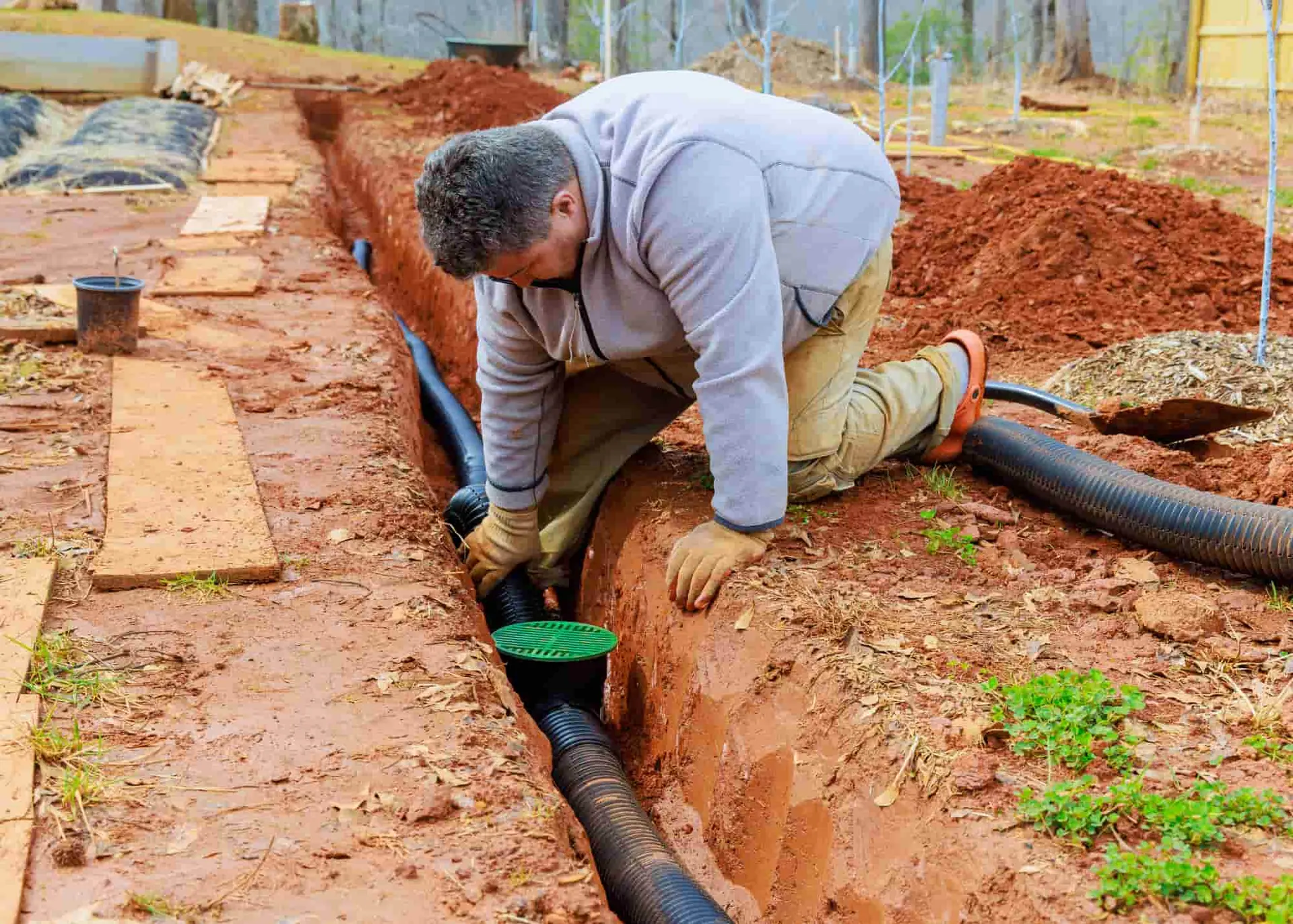
Sand lets water through quickly, but the water needs somewhere to go. The 20 cm gravel layer beneath the sand collects it; perforated pipes laid in the gravel carry it across the court in lateral runs, and a collector run connects to the storm-water line or a soakaway. The geotextile fabric sits between gravel and sand: it passes water but holds back the grains. Leave out the fabric and the sand migrates into the voids in the gravel, the depth is lost and the drainage clogs within a few seasons.
The budget for a 22 × 14 m court assumes four lateral runs and one collector run. On clay ground this layout is built in full. Where the ground is naturally sandy and free-draining, a percolation test is carried out during the survey; depending on the result, the gravel depth or the number of runs can be reduced. If the outlet point is far away, the pipe length increases.
37.200 – 51.460 ₺
62 m³ · 600 – 830 ₺/m³
Washed coarse gravel that collects the water and forms a load-bearing layer under the sand.
12.090 – 17.940 ₺
78 m · 155 – 230 ₺/m
Lateral runs in the gravel and a collector along the court edge; connection to the outlet included.
10.200 – 15.300 ₺
340 m² · 30 – 45 ₺/m²
Fabric separating sand from gravel, laid with overlaps and turned up at the foot of the kerb.
On sand the posts are fixed not into a surface but into the ground beneath the sand, and the lines are not painted but pegged out with webbing. Net heights and court dimensions are on the home page; this is what these items cost.
6.000 – 15.000 ₺
For each post a concrete footing is cast through the sand and gravel onto the compacted ground; the post sits in a sleeve in the footing and can be removed at the end of the season. If the footing is left within the sand, the post leans as the net is tensioned.
12.000 – 30.000 ₺
Two posts, a tensioning mechanism, the net and antennas. At seafront facilities, salt air calls for hot-dip galvanised or stainless hardware, which moves the set to the top of the range.
6.000 – 15.000 ₺
The four sides are marked with coloured webbing anchored at the corners. Sun and sand wear the webbing, so the annual maintenance budget includes an allowance for replacing it.
Lighting Optional
18.000 – 60.000 ₺Needed on hotel and residential courts used in the evening. For training and recreational play at least 300 lux over the playing area is enough; the number of luminaires and pole height are calculated per project. If lighting is postponed, the cable duct should be laid during excavation.
Perimeter fencing Optional
90.000 – 180.000 ₺Stops the ball escaping onto a road, a neighbouring plot or a footpath. In practice necessary for park and residential courts; a hotel court on the beach may not need one.
The difference between two sand courts of the same size usually comes not from material quality but from where the court is built. The direction of each factor is shown at the top of its card.
Because sand is the largest item, haulage distance moves the total more than any other factor. Sand moving from one end of its unit-price range to the other makes a difference of 36.900 ₺ on its own.
On clay ground the drainage layout is built in full. On naturally sandy, fast-draining ground the gravel depth and pipe runs can be reduced according to a percolation test.
If the storm-water line or soakaway the collector connects to is far away, the pipe length (78 m) increases; if a soakaway has to be dug, it becomes a separate item.
If the 185 m³ of excavated soil can be reused as landscaping fill on the same site, haulage falls; if it has to go to a disposal site, the excavation item moves towards the top of its range.
Where rock or a high water table prevents digging, the court is built above ground. Excavation drops, but the kerb holding the sand grows into a perimeter wall.
A galvanised or stainless post and tensioner set moves to the top of the range; in return the hardware lasts longer.
If the sand truck cannot pull up beside the court, sand and gravel are moved with small loaders; labour and time go up. This is most common in hotel gardens and inside residential compounds.
Every scenario starts from the same 22 × 14 m basic court; the difference comes from the optional items and the location. Amounts are added up the same way as in the calculator.
222.000 – 380.000 ₺
Basic court + Lighting
Guests play into the evening, so lighting is part of the budget. The court is usually built in an existing garden or at the edge of the beach, and the excavated soil can be used in landscaping. On the seafront, corrosion-resistant hardware is chosen.
294.000 – 500.000 ₺
Basic court + Perimeter fencing
In a public space, stray balls and unsupervised use are what matter, so the perimeter fence goes into the budget. Park lighting usually already exists. The net is taken down and stored out of season.
312.000 – 560.000 ₺
Basic court + Lighting + Perimeter fencing
Evening use and balls flying towards neighbouring blocks come together, so both lighting and a fence are needed. At a club, the more intensive the training, the more often the sand is screened and the closer the top-up quantity gets to the upper end of the maintenance range.
222.000 – 380.000 ₺
Inside an existing building · Basic court + Lighting
672.000 – 1.480.000 ₺
With a new indoor structure
If the floor of an existing building cannot be excavated, the court is built as a raised pit; excavation drops and the perimeter wall holding the sand is priced separately. Lighting is essential. If a new indoor structure is needed, the calculator's single-court construction range (450.000 – 1.100.000 ₺) is added.
Tell us where the court will go and how it will be used; we will inspect the ground, access and drainage outlet on site and send an item-by-item written quotation.
Request a survey for your beach courtContracted annual maintenance of a single beach volleyball court costs 15.000 – 30.000 ₺ — the same as the annual maintenance range used across the site.
Sand top-up
3.900 – 9.500 ₺Sand carried off the court by wind, shoes and clothing typically amounts to 5–8 % of the total volume a year: 6 – 10 m³ on a court holding 123 m³. The unit price is taken from the sand item.
Screening and deep raking
6.000 – 11.000 ₺Once or twice a year the sand is sieved; stones, glass, cigarette ends and plant debris are removed and compacted sand is loosened.
Net and webbing replacement allowance
3.000 – 6.000 ₺A yearly allowance for the webbing and net worn by sun and sand.
Edge cleaning and weeds
2.100 – 3.500 ₺Removing weeds growing at the foot of the kerb and along the sand edge; checking kerb tops and corner anchors.
Annual maintenance total
15.000 – 30.000 ₺Daily or weekly surface raking is done by facility staff and is not included in this total.
A sand court's life is set not by a single surface but by components that wear at different rates. The order below runs from most frequent to longest term.
Footprints and hollows are smoothed and sand depth is kept even across the court. This is the work that actually preserves the depth.
Lost sand is replaced, the sand is screened, and the boundary webbing and net are checked and replaced if needed.
Textile parts constantly exposed to sun and sand are renewed according to seasonal use; posts and footings stay in place.
If the drainage and fabric were built correctly, the substructure stays in place. When the sand becomes contaminated or its share of fines rises, it is partly or fully replaced; the decision is made on the condition seen after screening.
Sand. On a 22 × 14 m court a 40 cm layer comes to 123 m³, and at 650 – 950 ₺/m³ it costs 79.950 – 116.850 ₺ — 38% of the basic court cost. Drainage gravel comes second at 17%. That is why the distance to the quarry and whether the sand is washed and screened affect the total more than the rest of the material choices.
Most suppliers sell sand by the tonne or by the truckload. Taking the bulk density of dry, loose sand as roughly 1.5 – 1.6 t/m³, 123 m³ of sand weighs 185 – 197 t. Wet sand weighs heavier, so a quotation written on placed volume and depth is easier to compare. Because sand settles after placing, the settlement allowance should be stated separately.
Yes. Where rock is struck or the water table is high, the court is built as a raised pit. The excavation item drops, but the edge holding the sand and gravel becomes a perimeter wall close to 60 cm high instead of a kerb, and the drainage outlet is redesigned to suit the court level. The total often ends up close to that of an excavated court; which is more economical is decided on survey by measuring levels.
In most cases yes, but the scope depends on the ground. If the court sits on natural beach and the ground drains quickly, a percolation test is carried out during the survey; depending on the result, the gravel depth and pipe runs can be reduced. If the court sits on soil or fill in a hotel garden, the drainage layout is built in full. In both cases the fabric stops the imported sand mixing with the ground below.
Not quite. Volume-driven items such as area, sand and gravel double; but when the two courts share a long side, the kerb comes to 100 m instead of 72 m × 2. The drainage outlet, site set-up and transport are shared too. Most of the saving comes from these shared items.
Sand carried off the court by wind, shoes and clothing typically amounts to 5–8 % of the total volume a year; on a court holding 123 m³ that is 6 – 10 m³, costing 3.900 – 9.500 ₺. Losses are higher on courts without a kerb or exposed to wind. If the sand is screened before topping up, the shortfall can be judged more accurately.
A single court takes about 2 – 3 weeks. Excavation and drainage take 3 – 7 days, casting the kerb and concrete bed and letting it set 3 – 5 days, laying fabric and sand 2 – 3 days, and fitting posts, net and webbing 1 – 2 days. Unlike surfaced courts there is no temperature or humidity requirement; the schedule is driven mainly by sand supply and by rain stopping excavation.
Yes. If the concrete floor cannot be excavated, the court is built as a raised pit, and because little water is used the drainage is simpler. On the other hand lighting is essential, and ventilation and dampening are planned for sand dust. Inside an existing building the budget starts from 222.000 – 380.000 ₺; if a new structure is needed, it comes to 672.000 – 1.480.000 ₺ including construction.
Yes. When beach is selected the calculator adds no surfacing; it adds up the ground preparation and subbase, posts and net system, and line marking rows and returns 204.000 – 320.000 ₺. The nine items on this page open up those three rows, and the totals are exactly the same. Lighting (18.000 – 60.000 ₺) and a perimeter fence (90.000 – 180.000 ₺) are optional in both places.
Quantities first: sand depth and m³, gravel depth, whether fabric is included, kerb length and type, and where the drainage pipe connects. The gap in a cheap quotation usually comes from one of these items being missing or specified thinner. Between two quotations with the same quantities, the difference is usually the source of the sand and the haulage distance.
The technical standards of a beach court and the cost of hard-surface courts are covered on the home page and on the topic pages.
The 16 × 8 m playing court, why the sand is that deep, the build-up order and how it differs from indoor volleyball.
Work out your own range for a beach, outdoor or indoor court by size and equipment.
Lux levels, fence height and post standards.
Unit prices for acrylic, EPDM and other surface systems, and totals for a 360 m² court.
Considering a hard surface instead of sand: whether your existing concrete slab can carry the coating, and the unit prices.
Share your site location and approximate dimensions; we will call you to schedule a survey and prepare a written quote.